The Real Bill for 'Free': What Mainstream Social Media Is Actually Charging You Every Day
There's a running joke in tech circles that if you're not paying for the product, you are the product. But honestly? That framing is too gentle. It lets platforms off the hook by making the whole thing sound like a fair trade. You get cat videos and birthday reminders; they get your data. Even-steven.
Except it's not even close to even.
The actual economics of mainstream social media are deeply, deliberately stacked against you — and the costs aren't just measured in dollars. They show up in your attention span, your decision-making, your mental health, and the slow, grinding surrender of your autonomy to systems designed by some of the most well-funded engineers on the planet. Once you start adding it all up, the idea that these platforms are "free" starts looking less like a bargain and more like a con.
The Attention Tax You Never Consented To
Let's start with the most obvious one: time. The average American spends roughly two and a half hours a day on social media. That's not a statistic the platforms advertise, but it's one their engineers actively engineer toward. Every infinite scroll, every autoplay video, every algorithmically timed notification is a micro-decision designed by a team of behavioral scientists to keep you on the platform for just a few more minutes.
Mulitply two and a half hours by 365 days and you're looking at over 900 hours a year — more than 37 full days — handed over to platforms that use every second to serve you ads, harvest your reactions, and refine their models of who you are and what you'll click next.
If your time is worth anything — and it is — that's an enormous bill. At even the federal minimum wage of $7.25 an hour, you're "spending" more than $6,500 a year just sitting in the feed. For most working adults, the real opportunity cost is significantly higher.
Cognitive Load: The Hidden Tax on Your Brain
Beyond raw time, there's something harder to measure but just as real: the cognitive drag that comes from living inside algorithmically curated reality.
Mainstream platforms don't just show you content — they select it based on what provokes the strongest emotional reaction. Outrage, anxiety, desire, tribal identity. These are the emotional levers that drive engagement, and driving engagement is the entire business model. The result is that your mental bandwidth, the finite cognitive resource you need to make good decisions, learn new things, and stay emotionally regulated, gets burned through at an accelerated rate.
Researchers at places like Stanford and NYU have documented how heavy social media use correlates with reduced attention spans, increased anxiety, and what some call "decision fatigue" — a state where you're so mentally depleted from processing endless stimuli that you start making worse choices across the board. That's not a side effect. It's closer to a feature. Exhausted, emotionally activated users are more susceptible to the advertising that funds the whole machine.
The Data Economy and What It Actually Costs You
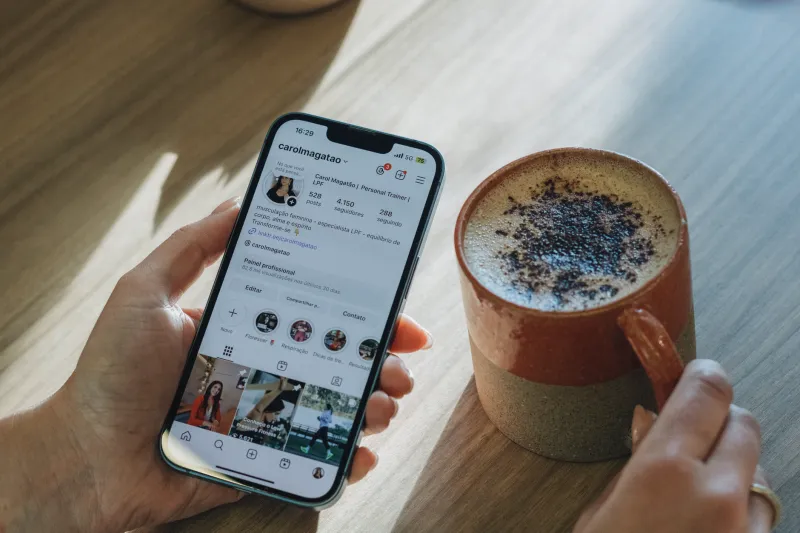
Here's where things get genuinely financial. Your behavioral data — what you click, how long you hover, what you buy after seeing an ad — is packaged and sold to advertisers, data brokers, political campaigns, and anyone else willing to pay. The global data broker industry is worth over $300 billion annually. You generate the raw material for that industry every time you open Instagram.
And it's not just about ads. Insurance companies have begun exploring social media data to assess risk profiles. Employers screen candidates through their feeds. Landlords have been known to research tenants. The data you generate on "free" platforms doesn't stay neatly inside the advertising ecosystem — it leaks into decisions that affect your real-world opportunities, sometimes in ways you'll never know about.
The Switching Cost Trap
Platforms also invest heavily in making it expensive to leave. Not financially — but socially and psychologically. Your photos, your friend connections, your group memberships, your years of posts — all of it lives inside a walled garden that the platform controls. Want to leave Facebook? You can, technically. But you can't take your social graph with you. You can't export your communities in a usable way. You start over.
This is called "lock-in," and it's not accidental. The higher the switching cost, the more leverage the platform has to degrade your experience — more ads, more data collection, more algorithmic manipulation — without losing you as a user. You stay not because the platform serves you well, but because leaving feels like too much to lose.
What Decentralized Platforms Actually Change
This is where the economics get interesting, and where something like a federated or decentralized network flips the entire model.
Platforms built on open protocols — think the Fediverse, self-hosted communities, or networks like the one we cover here at RedMatrix — don't have an attention-monetization business model, because they don't have investors demanding exponential user growth. There's no ad network to feed. There's no behavioral data being packaged for sale. The incentive structure that drives all the manipulation on mainstream platforms simply doesn't exist.
What you get instead is a platform that has no financial reason to addict you, no revenue model that depends on keeping you anxious and scrolling, and no lock-in mechanism that traps your social life inside a corporate server. You can move your identity across servers. You can host your own community. You can leave without losing everything.
Yes, some decentralized platforms cost a few dollars a month to self-host or use a paid instance. But compare that to the 900 hours a year, the cognitive drain, the data harvesting, and the psychological manipulation — and suddenly a $5/month privacy-respecting platform starts looking like an extraordinary deal.
Reframing the Choice
The "free vs. paid" framing that mainstream platforms rely on is a sleight of hand. It defines cost narrowly as dollars out of pocket, while ignoring every other dimension of what you're giving up. Time. Attention. Mental health. Data sovereignty. The ability to make decisions without an algorithm's thumb on the scale.
Once you reframe the question — not "what does this cost?" but "what does this cost me?" — the math changes completely. The platforms charging you nothing in dollars are often the ones extracting the highest price. And the alternatives that ask for a small subscription, a little technical setup, or just a willingness to try something different? They might be the most rational financial decision you can make for your digital life.
You've been paying this whole time. You just weren't given an itemized receipt.