Your Boss Is Watching: The Creepy World of Remote Work Surveillance and How to Push Back
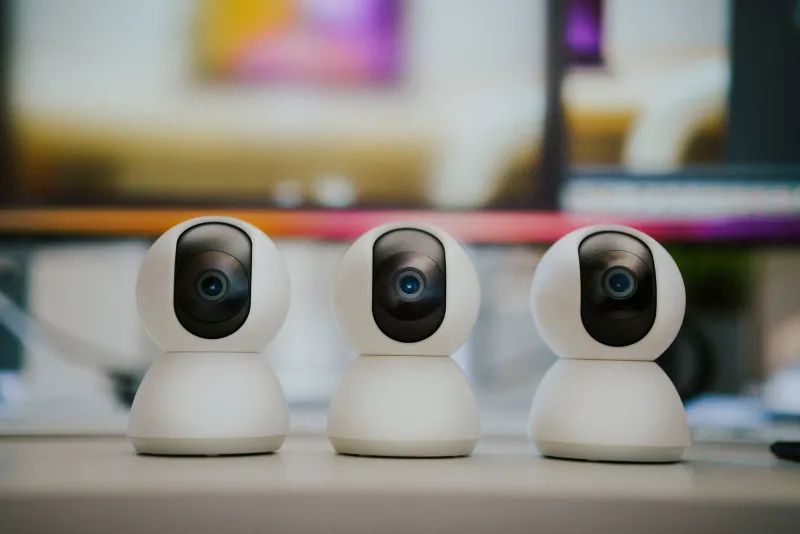
Remember when working from home felt like a win? No commute, no fluorescent lighting, no one hovering over your shoulder. Turns out, that last part was wishful thinking.
Since remote work exploded in 2020, a quiet industry has boomed in parallel: employee monitoring software. Products like Teramind, Hubstaff, ActivTrak, and Controlio have become standard-issue tools in the HR departments of companies ranging from scrappy startups to Fortune 500 giants. And most employees have absolutely no idea how deep the rabbit hole goes.
This isn't paranoia. This is your actual workday — logged, timestamped, and stored on someone else's server.
What They're Actually Collecting
Let's be specific, because the vague phrase "monitoring software" doesn't capture how invasive this stuff really is.
Keystroke logging records every key you press — every search query, every half-drafted message you deleted, every password you typed into a site that isn't work-related. Some tools flag "low productivity" periods based purely on keyboard inactivity, meaning a five-minute bathroom break becomes a data point against you.
Random screenshot capture is exactly what it sounds like. Software like Time Doctor takes periodic screenshots of your screen — sometimes every few minutes — and uploads them to a dashboard your manager can browse at will. Did you have a personal email tab open? Your bank statement? A medical portal? Potentially visible.
Webcam activation is where things get genuinely dystopian. Some platforms — particularly those marketed to call centers and customer service operations — can activate your laptop camera periodically to confirm you're physically at your desk. A few tools use AI to detect whether you "look engaged."
Location tracking gets complicated fast. If your employer issued you a company laptop or phone, there's a solid chance it's pinging your GPS coordinates. This matters even if you work from home — some companies want to know if you're at a coffee shop, a coworking space, or, god forbid, a different city.
Network and browser monitoring logs every website you visit, how long you spent there, and sometimes the content of unencrypted traffic passing through a company VPN.
Put all of that together and your employer may have a more granular picture of your workday than you do.
The Legal Gray Area Nobody Warned You About
Here's the uncomfortable truth: in most of the United States, this is completely legal. Federal law under the Electronic Communications Privacy Act gives employers wide latitude to monitor activity on their own equipment and networks. And because most remote workers are using company-issued devices or logging into company systems, that latitude is enormous.
State laws vary, but not by as much as you'd hope. Connecticut and Delaware require employers to notify workers before monitoring begins. A handful of other states have partial protections. But in the majority of the country, your employer doesn't need to tell you anything — and often doesn't.
What about your personal devices? The picture gets murkier. If you've installed a company-required MDM (Mobile Device Management) profile on your personal phone or laptop — which many remote workers have — your employer may have more access than you realize, including the ability to remotely wipe the device.
Some legal scholars argue that invasive monitoring without clear disclosure violates reasonable expectations of privacy, but those arguments haven't translated into strong federal protections yet. The law is catching up slowly. The surveillance industry is moving fast.
The Normalization Nobody's Talking About
Perhaps the most insidious part of all this isn't the surveillance itself — it's how quickly it became normal.
Managers who would never install a camera in an open-plan office have no apparent hesitation deploying screenshot tools across a remote team. The physical distance seems to dissolve the social contract that used to govern workplace dignity. When you can't see someone, apparently, it becomes easier to treat their entire digital existence as company property.
And workers, anxious about job security, often comply without pushback — or without even knowing they have the option to push back.
What You Can Actually Do About It
Okay, here's where we stop just describing the problem and talk about what you can realistically do. Note: we're not lawyers, and nothing here is legal advice. But we do believe you have the right to understand your situation and make informed choices.
Separate your devices. This is the single most effective thing you can do. Use your personal device for personal activity — full stop. If your employer requires you to install software on personal devices, that's worth a frank conversation with HR about what exactly gets monitored and what doesn't. Get it in writing.
Read your employee handbook and any monitoring disclosure documents. Many companies are required to notify you, or choose to anyway. Knowing what's in scope changes how you operate.
Use a privacy-focused browser on personal devices. Firefox with uBlock Origin, or Brave, are solid choices. These won't help you on company devices running monitoring software, but they protect your personal browsing from your ISP and ad networks.
Communicate through encrypted channels on your personal time. Apps like Signal for personal messages mean your private conversations stay private — not routed through corporate email servers or Slack, which your employer almost certainly has access to.
Consider a personal VPN on personal devices. A reputable no-logs VPN (Mullvad is a favorite in privacy circles) encrypts your personal traffic so your ISP and any network-level monitoring can't see what you're doing. Again — this applies to personal devices on personal networks, not company equipment.
Know your state's laws. A quick search for "[your state] employee monitoring law" will tell you whether your employer has disclosure obligations. If they violated them, that's worth a conversation with an employment attorney.
Advocate collectively. Individual action has limits. If you're in a workplace where monitoring feels excessive or undisclosed, raise it with coworkers, HR, or — if you're in a unionized environment — your union rep. There's growing momentum around legislative reform on this issue, and worker voices matter.
The Bigger Picture
At RedMatrix, we talk a lot about reclaiming control over your digital identity — choosing platforms that respect your autonomy instead of harvesting your behavior. The workplace surveillance conversation fits squarely into that same framework.
The tools your employer uses to monitor you are built by companies with the same incentive structure as Big Tech: collect more data, build more detailed profiles, sell the capability to whoever will pay. The fact that it's your boss buying the product instead of an advertiser doesn't make it less invasive.
Decentralized, privacy-respecting communication tools can help — both for your personal life and, increasingly, for teams that want to operate without feeding everything into a corporate surveillance stack. But technology alone isn't the answer. The deeper issue is cultural: a growing assumption that workers forfeit meaningful privacy the moment they clock in.
You didn't sign up to live inside someone else's panopticon. And you shouldn't have to pretend that's normal.