Swipe Smart: How Decentralized Dating Puts Your Romantic Data Back in Your Hands
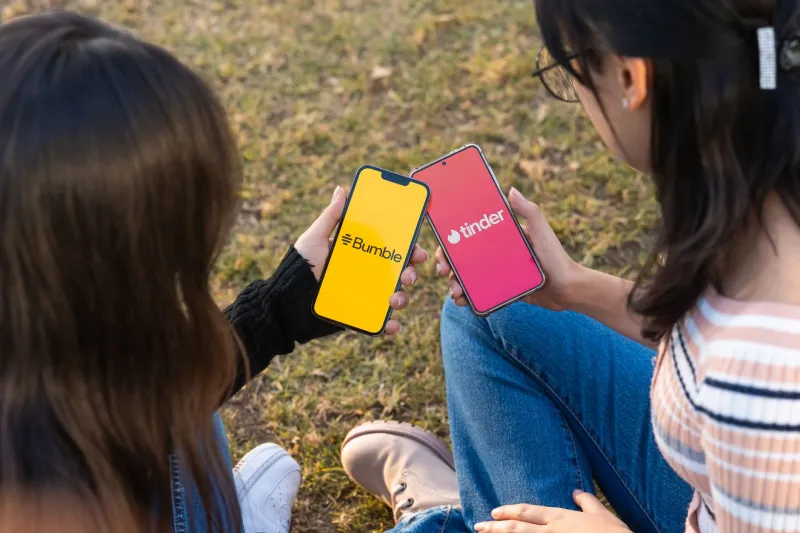
Let's be honest about something: the moment you set up a profile on Tinder, Hinge, or Bumble, you're not just looking for love. You're handing over your location history, your sexual preferences, your most vulnerable late-night messages, and often your phone number and face—to a corporation whose actual job is to sell attention and data. That's a weird trade-off, and more people are starting to notice.
The good news? A quieter corner of the internet has been building something different. Decentralized dating and peer-to-peer communication tools are emerging as genuine alternatives, and while they're not perfect, they represent a fundamentally different vision of how romantic connections should work online.
What's Actually Wrong With Mainstream Dating Apps
Before we get into the alternatives, it's worth naming the problem clearly. Companies like Match Group—which owns Tinder, Hinge, OkCupid, and a pile of other apps—are sitting on an extraordinary amount of intimate data. We're talking about who you're attracted to, what you say in private conversations, how often you open the app at 2 a.m., and what photos make you swipe right.
In 2023, a Norwegian consumer rights group found that several major dating apps were still sharing user data with hundreds of third-party advertising partners. That data doesn't just disappear. It gets aggregated, sold, and used to build behavioral profiles that follow you around the web. The intimate stuff you share while trying to find a partner becomes raw material for ad targeting.
And then there are the breaches. Ashley Madison. MeetMindful. Friend Finder Networks. Dating platforms are high-value targets, and when they get hit, the fallout can be genuinely life-altering for users.
Enter the Decentralized Alternative
Decentralized dating platforms approach the problem from a different architectural angle. Instead of funneling all your data through a central corporate server, they distribute it—sometimes to servers run by independent communities, sometimes directly between users' devices.
A few platforms worth knowing about right now:
Alovoa is an open-source dating platform that you can either use on its main instance or self-host entirely. There are no algorithms designed to keep you swiping indefinitely, no venture capital pressure to monetize your loneliness, and the code is publicly auditable. It's not as polished as Hinge, but it's genuinely community-driven.
Nostr-based social tools are increasingly being used for dating-adjacent connections. Nostr is a decentralized protocol where your identity is tied to a cryptographic key you control—not an account owned by a company. Several experimental dating and connection-focused clients have been built on top of it. The ecosystem is rough around the edges, but the underlying privacy model is solid.
Briar isn't a dating app per se, but it's worth mentioning for the conversation side of things. It's a peer-to-peer encrypted messenger that works even without internet (over Bluetooth or Wi-Fi direct), and some privacy-conscious daters use it to move conversations off corporate platforms once they've made a connection elsewhere.
Veilid-based applications are on the horizon. Veilid is a new open-source network framework designed specifically for privacy-first apps, and developers are already building communication tools on top of it that could include dating functionality.
How to Vet a Platform: Cutting Through the Privacy Greenwashing
Here's where it gets practical—because not everything that calls itself "private" or "decentralized" actually delivers. Some platforms slap those words on their marketing while still running a pretty traditional data-harvesting operation under the hood. Here's a quick checklist for separating genuine privacy from vibes-based branding:
Check the business model. If it's free and there's no clear revenue source (subscriptions, donations, grants), ask yourself how the lights stay on. Advertising-supported models almost always involve data collection, even if they don't say so loudly.
Look for open-source code. Can anyone actually inspect how the app works? Platforms with publicly available source code on GitHub or similar repositories can be audited by independent researchers. Closed-source "privacy" claims are just that—claims.
Understand where data lives. Does the platform store your messages on its servers, or are they end-to-end encrypted so only you and your match can read them? There's a massive difference between "we encrypt data in transit" and "we can't read your messages even if we wanted to."
Read the privacy policy—specifically the data retention and sharing sections. It's boring, but the language around how long they keep your data and whether they share it with "partners" tells you a lot.
Ask about deletion. Can you actually delete your account and have your data removed? Or does it just hide your profile while the underlying data sticks around?
The Real Trade-Offs
Decentralized dating tools are not a perfect replacement for mainstream apps—at least not yet. User bases are smaller, which matters a lot in dating. Features are often less polished. And the learning curve for some tools can be steep if you're not already comfortable with concepts like cryptographic keys or federated servers.
But here's the thing: the trade-off is changing. As more people get burned by data breaches, targeted ads that feel uncomfortably intimate, or the general exhaustion of being a product, the appeal of platforms that treat you like a person—not a data point—is growing.
You don't have to go full self-hosted server to protect your romantic privacy, either. Even small steps help: moving conversations to Signal once you've matched with someone, being thoughtful about which photos you upload, and checking whether a platform has end-to-end encryption for messages.
Your Love Life Shouldn't Fund Someone Else's Ad Revenue
There's something genuinely strange about the current setup—the most vulnerable, emotionally honest parts of your life, the conversations you have while falling for someone, the fears and hopes you share in a new connection, all of it flowing through servers owned by companies whose incentive is to keep you engaged and monetizable.
Decentralized platforms aren't magic. They won't guarantee you'll find your person. But they do offer something the mainstream apps can't: the possibility that your intimate data stays yours. In a landscape where your attention and your heart are both treated as commodities, that's not nothing.
That's the RedMatrix take: owning your identity doesn't stop at your social feed. It extends to every corner of your digital life—including the parts where you're most human.