What Are Channels on RedMatrix? The Stones That Build Your Decentralized Social Life

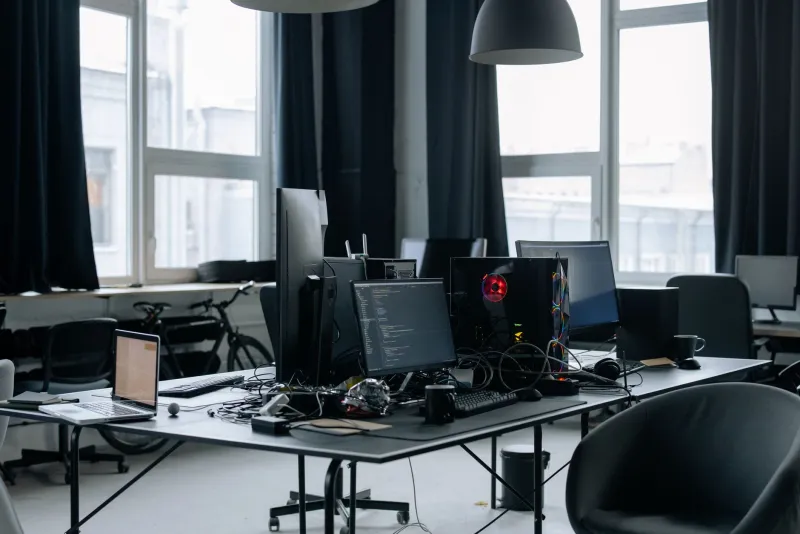
Photo by Photo by Patrick Fore on Unsplash on Unsplash
If you've just landed on RedMatrix and you're poking around trying to figure out what a "channel" actually is, you're not alone. It's one of those terms that sounds technical until someone breaks it down for you — and once they do, it clicks instantly.
Think of channels like stones. Each one is a solid, self-contained unit. Stack them together and you get something much bigger: a network, a community, a digital life that you actually own. That's the core idea behind how RedMatrix is built, and it's fundamentally different from the way Facebook, Instagram, or Twitter work.
So let's get into it.
What Is a Channel, Exactly?
A channel on RedMatrix is basically your identity — but it's more flexible than that. When you create an account, you're actually creating a channel. That channel has its own profile, its own content stream, its own permissions, and its own connections.
Here's where it gets interesting: you can have more than one channel under a single login. Want a personal channel for friends and family? Done. Want a separate channel for your photography hobby? Easy. Want a professional channel for your freelance work? No problem. Each one is distinct, with its own audience, its own privacy settings, and its own vibe.
This is nothing like having a second Instagram account where you're still beholden to the same algorithm, the same data harvesting, and the same terms of service. On RedMatrix, each channel is genuinely separate — and you control all of them.
Why "Stones" Is Actually a Pretty Good Metaphor
Imagine you're building a wall. Each stone is independent, but together they form something sturdy and functional. That's how channels work across the federated web that RedMatrix is part of.
Your channel doesn't live on some central server owned by a corporation in Silicon Valley. It lives on a node — a server that could be run by you, by a community you trust, or by RedMatrix itself. And because the system is federated, your channel can connect and communicate with channels on completely different servers, running different software, across the entire decentralized social web.
Each channel is a stone. Each connection between channels is mortar. The result is a network that no single company can knock down, buy out, or shut off.
How Channels Are Different From Profiles on Mainstream Platforms
On Facebook, your profile is Facebook's property. Seriously — go read their terms of service. They can suspend it, delete it, or restrict it whenever they feel like it. You can put years of memories, connections, and content into that profile, and it can disappear overnight because an algorithm flagged something it didn't like.
On RedMatrix, your channel belongs to you. If you're self-hosting, that's literally true in a technical sense — the data sits on your server. But even if you're using a hosted node, the channel is still yours in a way that matters: you can export it, move it, clone it, or back it up. No platform lock-in. No hostage situation.
You're also not performing for an algorithm. Your channel's content reaches the people connected to it based on your settings, not based on what some engagement-optimization system thinks will keep people scrolling.
Permissions: The Part That Actually Matters
Here's something mainstream platforms will never give you: granular, channel-level permission controls.
With a RedMatrix channel, you decide who can see your posts. Not just "public" or "friends" or "friends of friends" — but specific lists, specific connections, specific roles. You can make some content visible only to people you've explicitly approved. You can allow certain channels to comment but not share. You can lock down your channel entirely and run it like a private newsletter.
This isn't a premium feature. It's just how channels work.
Compare that to Instagram, where your two options are basically "everyone" or "approved followers," and where even your "private" posts are being analyzed for ad targeting. The difference in control is not subtle.
Channel Cloning and Nomadic Identity
One of the wildest features of the RedMatrix channel system is something called nomadic identity. Your channel can exist on multiple servers simultaneously. If one server goes down, your channel keeps working on another. If you want to move your channel to a different host, you can do that without losing your connections or your history.
This is the kind of thing that sounds like a nerdy technical footnote until you realize what it actually means: your social identity can never be taken away from you by a platform decision. No deplatforming. No account suspension that wipes out years of your digital life. Your channel persists because it isn't tied to a single point of failure.
That's not a feature you'll find on Twitter, TikTok, or anywhere in the mainstream social media world.
Setting Up Your First Channel: The Short Version
If you're new to RedMatrix and ready to get started, here's the quick rundown:
- Create your account — this automatically creates your first channel.
- Customize your channel profile — add a name, photo, bio, and any other details you want public.
- Set your permissions — decide who can see your content, who can connect with you, and who can interact with your posts.
- Start connecting — search for other channels on RedMatrix or across the federated network and send connection requests.
- Post something — your content goes out to your connections based on the permissions you set. No algorithm decides who sees it.
If you want to add a second channel for a different part of your life, you can do that from your account settings. Each new channel is its own stone in the wall.
The Bigger Picture
Channels aren't just a feature. They're a philosophy. The idea that your identity online should be modular, portable, and genuinely yours runs completely counter to how mainstream platforms are designed. Those platforms want you locked in, dependent, and generating data they can sell.
RedMatrix is built on the opposite assumption: that you're an adult who can manage your own digital life, set your own rules, and decide who gets access to what.
Channels are how that plays out in practice. Each one is a stone. And you're the one deciding what gets built.
Ready to start stacking? Your first channel is waiting.